
Introduction
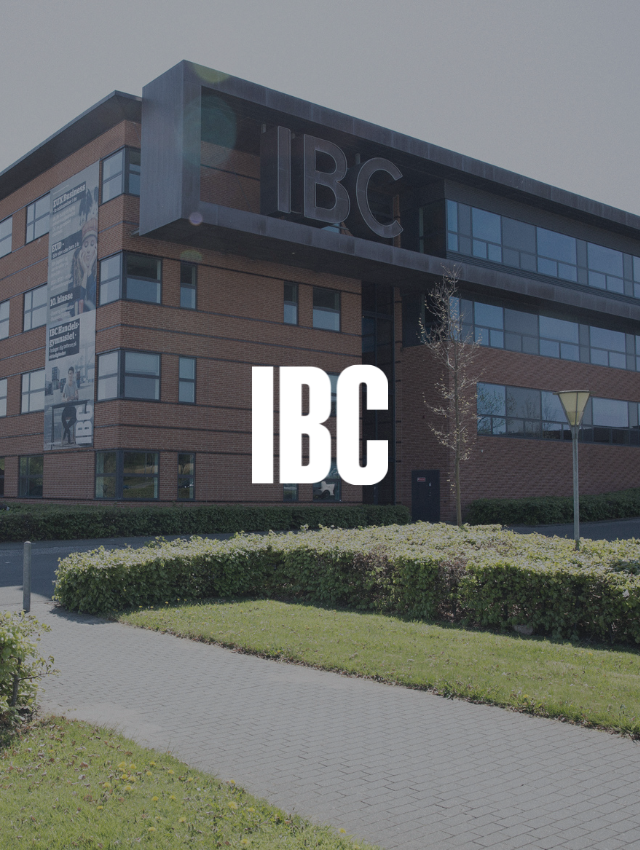
International Business College (IBC), one of Denmark’s largest business colleges, is developing an institution-wide approach to generative AI across its HHX and EUD/EUX programmes and campuses. The project, AI – fra snyd til hybrid intelligens (AI – from cheating to Hybrid Intelligence), is funded by Region Syddanmark’s education fund and supported through collaboration with the Center for Hybrid Intelligence.
The title reflects the project’s central ambition: to move AI away from being understood mainly as an integrity threat that must be controlled and toward becoming a structured and governed part of student learning. The initiative is not limited to introducing new tools or updating policies. It explores how IBC can become an early adopter of Hybrid Intelligence practices and take a more proactive role in shaping how AI is used in education and future professional life.
The Context
IBC’s project is grounded in the continued importance of subject competence, personal formation, autonomy and critical judgment. At the same time, the development of generative AI challenges education to reconsider its broader institutional role.
Educational institutions can no longer respond only by adapting existing teaching practices to new technologies. They must also become proactive societal actors that experiment with, evaluate and help shape emerging forms of human–AI collaboration. For IBC, this means preparing students not only to enter an AI-transformed labour market, but also to participate in redesigning the practices, workflows and professional norms that will define it.
Generative AI has destabilized some of the traditional methods used to support learning. Written assignments and other productive tasks have long been used to encourage reflection, application of subject knowledge and the development of critical competence. These outputs can now be generated without the student necessarily going through the learning process the task was designed to create.
IBC also identifies a risk that unstructured access to AI could widen existing differences between students. Some may use AI to avoid difficult parts of the learning process, while others use it to ask better questions, compare perspectives and deepen their understanding. The challenge is therefore not simply whether students use AI, but how they use it, what they learn through the process and where responsibility remains with the student.
A baseline FERC and HI Maturity Survey involving 35 respondents provided an initial diagnostic foundation. Seventy-four per cent placed their current practice at Level 2, Emerging. This indicated that individual experimentation was already taking place, but that AI use remained fragmented and had not yet become part of a shared institutional culture or an established way of working across departments.


The Transformation Process
The IBC initiative is organized around three institutional tracks: technology, didactics and personal formation. The transformation was launched through a cross-campus kick-off and continued through department-level action-learning groups, allowing teachers to test and develop new practices within their own educational contexts.
Several parallel activities support the process:
- professional development for teachers;
- shared rules of engagement for AI use;
- a common framing model for specifying the role of AI in educational tasks;
- experimentation with teacher-configured AI assistants;
- a shared vocabulary for structured human–AI interaction;
- local action-learning cycles in which practices can be tested and adjusted.
Together, these activities connect institutional direction with practical capability building. The transformation is not treated as a single implementation project. It develops through shared principles, teacher experimentation, local adaptation and continued reflection across departments.
An important conclusion from the cross-campus kick-off was that learning and personal formation require a certain degree of friction. Students need to formulate, struggle, compare, reconsider and make decisions. When AI is used without structure, it can remove precisely the effort through which learning and independent judgment develop. IBC therefore approaches AI not only as a source of efficiency, but as something that must be deliberately designed into the learning process.
The Hybrid Intelligence Approach
Within the CHI contribution, the IBC transformation is examined through four connected areas:
- HI Culture
- HI Teaching Practice
- HI Future-Job Readiness
- HI Learning Objectives
These areas complement IBC’s three institutional tracks by translating the transformation into shared culture, classroom practice, future professional competence and formal educational objectives.
The cultural ambition is to move from isolated experimentation toward a shared understanding of high-quality human–AI collaboration. AI should not be treated as an authority or as a replacement for subject knowledge. It should function as a collaborative resource whose outputs must be interpreted, evaluated and shaped by teachers and students.
Central to this approach is the FERC framework: Frame, Explore, Refine and Commit.
- In Frame, the student or teacher defines the task, context, constraints and criteria for a good outcome.
- In Explore, AI is used to generate several possible approaches or perspectives.
- In Refine, the alternatives are compared, criticized and improved using subject knowledge and contextual understanding.
- In Commit, the human user selects and finalizes the outcome while taking responsibility for the decision.
FERC shifts attention away from finding a single effective prompt and toward governing the full collaboration process. It helps preserve human intention at the beginning of the interaction and human accountability at the end.

Maturity and Institutional Development
Institutional development is tracked through a five-level Hybrid Intelligence maturity model, ranging from Level 0, Inactive, to Level 4, Transformative.
At the lower levels, AI is either absent, primarily treated as a threat or used through isolated individual experiments. At the higher levels, shared principles, training and established practices make structured human–AI collaboration part of the institution’s normal way of working.
The long-term ambition is Level 4, where Hybrid Intelligence becomes part of IBC’s institutional identity. At this stage, IBC is not only responding to technological change. It actively experiments with and shapes educational practices that can strengthen human judgment, professional responsibility and future readiness.
This connects the internal transformation at IBC with a broader societal role. By becoming an early adopter of HI practices, IBC can contribute knowledge about how educational institutions can move beyond reactive AI adaptation and become active participants in shaping a human-centred future of work.
The maturity assessment is intended to be repeated over time, creating a way to follow whether development is moving beyond individual confidence and experimentation toward shared organizational capability.
Concrete Activities and Emerging Outputs
The collaboration has developed and explored several practical elements that connect institutional strategy with everyday educational practice:
- a Danish HI maturity self-assessment;
- FERC-based training and workshop activities;
- experimentation with teacher-configured AI assistants;
- shared principles and models for structuring AI-supported tasks;
- a concept for a future IBC graduate workflow assistant;
- a repeatable maturity measurement cycle.
The graduate workflow assistant concept explores how students might work with AI in future professional settings while retaining responsibility for evaluation, contextual interpretation and final decisions.
Together, these activities allow IBC to work at several levels at once: measuring cultural development, training teachers, testing new educational formats and connecting current teaching with future AI-supported professional practices.
Envisioned Outcomes
The intended outcome is not simply more frequent use of generative AI. It is a shared institutional ability to decide when AI should contribute, where human judgment must remain central and how responsibility should be distributed throughout the process.
For teachers, this means moving beyond a narrow focus on detection and control toward designing activities in which AI supports reflection without replacing it. For students, it means learning to frame problems, compare alternatives, evaluate AI-generated material and take responsibility for the final result.
At an institutional level, the ambition is for IBC to develop a recognizable HI culture connecting educational quality, personal formation and preparation for future professional life. It also positions IBC as an educational institution that does not merely react to the AI transition, but actively helps explore and shape what responsible human–AI collaboration should become.
The case remains an ongoing institutional transformation rather than an independent evaluation of outcomes. The first author of the education manifesto serves on the project’s advisory board, so the case should be understood as a formative design and implementation case rather than independent evidence of effectiveness. Detailed results from the departmental action-learning cycles and the development of shared rules for AI use are expected to be documented separately, while independent outcome studies remain necessary.